Our dance community has changed quite a bit since my involvement back in 2010 when I started out as a young kid with no formal training in dance.
With high aspirations and a lot of inspiration, I began to take class as often as I could while privately sessioning in my home garage at late hours of the night. It became an obsession and quickly turned into a lifestyle of taking class, going to rehearsals, and traveling to shows. But sometimes the late night practices, post-rehearsal “dinners”, and constant grind of training can turn into something more harmful than helpful.
Injuries in Choreography-Based Dance
With the data that Offset Med has been able to gather from working with choreography-based dancers for the past year, we typically observe more chronic injuries compared to acute injuries. This finding in combination with our personal interactions with the choreography-based dance community suggests that dancers are 1) Performing injured or in pain frequently, 2) Unable to seek appropriate care to address symptoms of injury and will wait until it becomes a significant problem, or 3) Missing fundamental screening and assessment to determine performer readiness prior to training. While addressing all the previous stated components may reduce the risk of injuries, it still does not provide an answer to how to implement change. We have much to work through as a generation to ensure that we make choreography-based dancer health and performance a priority and embedded in the practice of artist-athlete development.
#3 Most Common Injury in Dance: KNEE
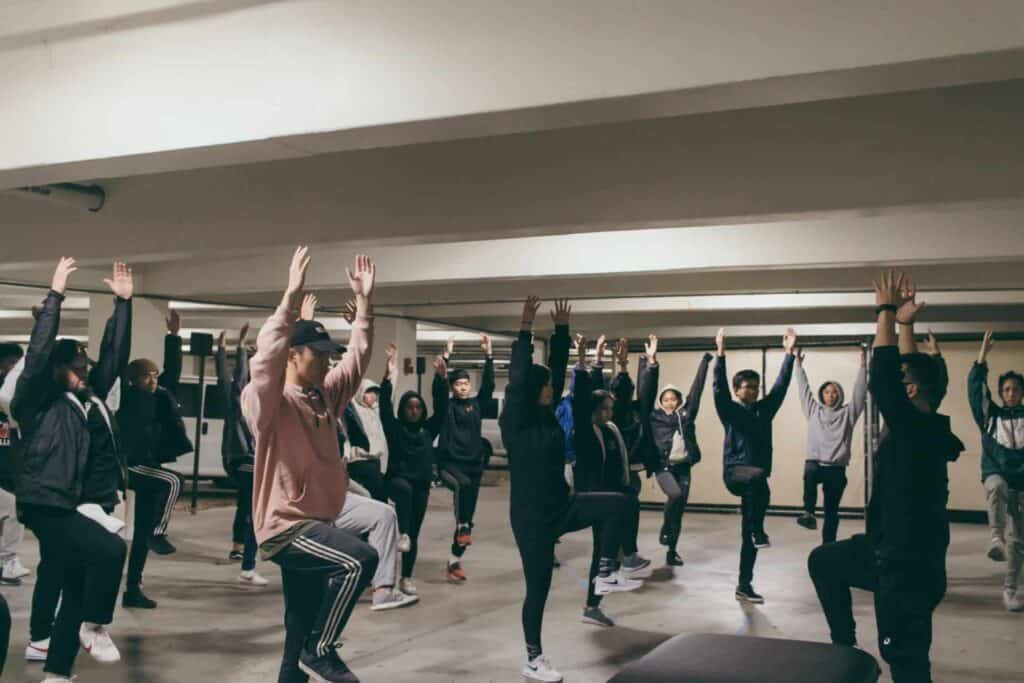
Our knees are caught up in between the position of the ankle on the bottom and our hips on the top. They require support and stability from both areas so that we can effortlessly change levels, absorb force from landings, and generate speed for our lower body.
Knee pain and discomfort are common among the choreography-based dance community with many different risk factors to why it is so prevalent. The interplay between flooring, shoe wear, and choreography style may increase the impact the lower body must absorb during movement. If there is floor work or acrobatics involved, coaches and choreographers must be vigilant and monitor their fatigue levels especially during rehearsals with high impact maneuvers.
Common Knee Injuries include:
- Patellar Tendinitis / Tendonopathy
- Patellofemoral Pain Syndrome
- Patellar Subluxation
- Anterior Cruciate Ligament Tear
- Meniscus Tear
#2 Most Common Injury in Dance: SHOULDER
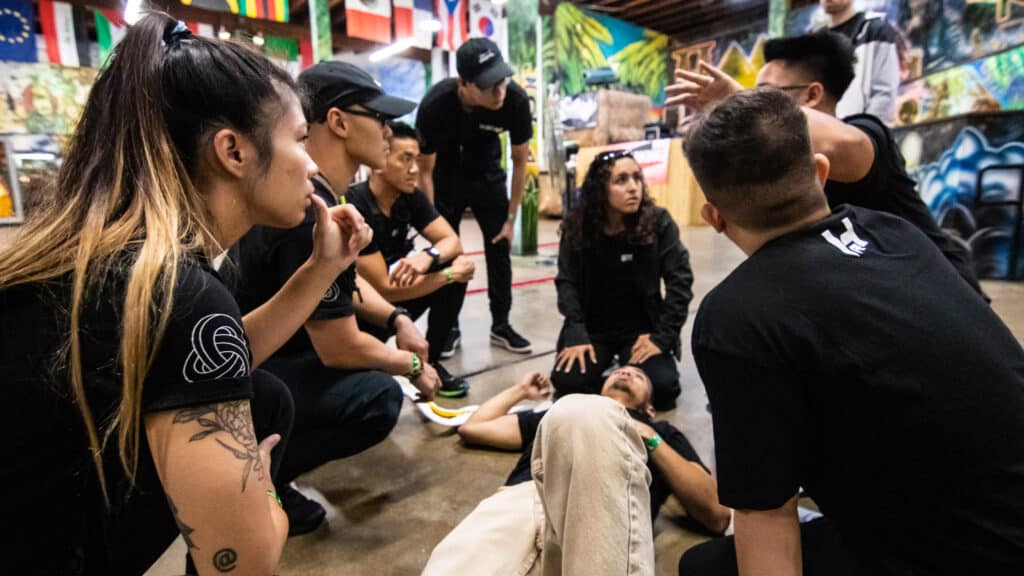
Our shoulder range of motion is highly influenced by the mobility of our spine, position of our ribcage, and control of our hip/core region. Because of the interconnected nature of this joint, it is common to have painless dysfunctions (abnormal movements without pain) in the shoulder region. This is important to note due to the repetitive nature of choreography as it relates to training, cleaning, and power.
More than often, issues at the shoulder are symptoms of a larger problem happening at the foundational level (i.e. breathing mechanics, hip/core control, strength deficit, etc) unless a clear and acute mechanism of injury was present.
What dancers need to know is that:
1) Shoulders typically need to be strengthened rather than stretched.
2) Hearing clicking and cracking noises is normal unless it is followed by persistent pain or limited range of motion after.
3) Moving slow and controlled is a prerequisite before throwing speed and power into the motion.
Common Shoulder Injuries include:
- Shoulder Impingement Syndrome
- Shoulder Instability
- Scapular Dyskinesis
- Trapezius Myalgia
THE #1 MOST Common Injury in Dance: SPINE
Back-related injuries win by a landslide in the choreography-based dance scene and can be the one of the most difficult challenges to deal with as an active performer. Lower back pain ranks first for self-reported injuries, with the neck region second, and mid-back trailing behind in third. While we have broken the classification in regions for better visualization, we must remember that the spine does not function in isolation especially in movement.
Our spine orchestrates a symphony that allows our body to coordinate mobility and stability in varying degrees at all points in time. However, the symphony is only as good as the musicians in the orchestra.
What dancers need to know about back care is:
1) Healthy hips and a strong core will save you from a lot of future aches in pain.
2) Lifestyle factors such as sleep, nutrition, stress, and physical activity will influence how you experience back pain and how fast you recover.
3) Your spine is one of the strongest joints in the body. Rarely are you born with a “bad” back. Changing your perspective and belief system is half the battle. Building resilience through exercise and positive lifestyle habits is the other half.
Common Back Injuries include:
- Chronic Low Back Pain
- Chronic Neck Pain
- Erector Spinae Muscle Spasm
How to Prevent Common Dance Injuries
*Disclaimer: The information on this post is not intended or implied to be a substitute for professional medical advice, diagnosis, or treatment. All content available on this page is for educational purposes only. We encourage all viewers to perform additional research and/or consult with a health care provider or movement professional if you have any specific concerns.
Understanding Load Management
Injuries and how they happen have a lot to do with how quickly your body learns, adapts, and recover from load over time. To simplify this concept even further, you have internal loads which are the individual’s physiological or perceptual response to stress (i.e. heart rate, perceived exertion level, breath rate, etc.) and external loads which characterize the physical stress on the body (practices accumulate, run throughs performed, steps counted, etc). Your body keeps track of the load that you experience throughout life. If you move at a pace or lift something greater than your capacity, compensation strategies will kick in to reduce greater risk of harm. If the compensation strategy fails (or you’ll run out of safe strategies) your body will protect itself from harm (i.e. reflex, spasm, pain) or become harmed.
Staying healthy and feeling in control isn’t always perfect. Life is messy and there will be times where you will not be at your best. The goal with load management is being able to recognize patterns, acknowledge high risk moments, and implementing strategies to reduce risk when necessary.
As the figure below describes, learn how to keep your bucket full.
As sport scientist Tim Gabbet would say, “It’s not the load that breaks you down, it’s the load you’re not prepared for.”
Provide Structure to the Unstructured
As dancers, we are often at battle with our personal priorities and pressure to work on our craft. This tension tends to bleed into the way we manage our time and priorities. What can help calm this tension is tying your lifestyle to a structured system that you can practice consistently. It can be as simple or as complex as you make it. Here are some practical examples:
- Organize Your Calendar: Use a calendar app (Google Calendar, iCal, Outlook, etc) and mark the dates/times of rehearsals, commute, meal times, training days, etc. By doing so, you can become aware of nuances that elite athletes consider such as nutrient timing, sleep hygiene, and training patterns. Learn to make your health and performance a priority and engineer your life with the time that’s left over.
- Create Habits & Routines: Habits and routines help take the mental strain of making decisions away from us in the moment. If you build good ones, they will serve you well. One example is to construct your own personal combination of dynamic stretches and bodyweight exercises that you can perform before class, rehearsals, performances, and training days. Learn about what your body needs and put the responsibility of warming up and cooling down on yourself rather than the instructor. They don’t know what your body needs to feel good, only you do.
- Define Your Non-Negotiables: A non-negotiable is a principle you abide by or a promise you keep to yourself or others. What you decide to hold onto will define how you make decisions, use your time, and define what you stand for. If my non-negotiable is to get at least 7 hours of sleep a night, I’m going to do everything I can to make that happen. Therefore, I will say no to the caffeine at 5:00PM and make sure my last meal is a few hours before my bedtime.
Training for Dance is Not More Dance Training
As stated in the title, participating in dance alone is not enough to keep injuries away from you. What dancers typically think is their “cardio” or “training” is actually what I would categorize as more Skill Specific Training. By taking a dance class the goal is inherently to learn how to dance and what movements to perform. The objective will be different if you take a pilates class, spin class, or weight training class. If dancers wish to take on the label of an athlete, then dancers must also understand investing in athletic attributes such as Strength, Cardiovascular Endurance, and Body Awareness will enhance any skill specific training that takes place. Remember that if you still want to be a better dancer, you need to dance. But the ability to show up and keep up is contingent on your athletic foundations. Here are a few ways you can work on building your athletic foundations:
- Own the Position: This coaching phrase is commonly used to describe the feeling of confidence and responsibility with movement. When you perform a bodyweight exercise, pause your movement in different angles and see if your body is comfortable with holding and “owning” that position of the movement. If you are shaking, not breathing, or feel unbalanced then you do not “own” that position, you are just passing through it. This is an instance where loading that position (with manipulation of weight or speed) is counter productive in terms of learning movement.
- Learn New Patterns: Give yourself options and you won’t be pinholed to one way of doing things. Maintaining a strong and healthy body equipped with the control of many movement styles will be less prone to injury. A body that only knows how to move in one way for all circumstances will struggle to move well in a changing world. There is benefit is taking the principles of martial arts and using them to enrich dance. There is benefit in building muscles to protect your joints with strength training to protect your ability to dance. There is benefit in taking that modern class to open up your artistic ability to create new shapes and patterns with your body. Explore and find what works with you.
- Seek Guidance from Professionals: I would be doing a disservice to you as an athlete and to my industry as an injury prevention practitioner if I left out this part. Just like how you want to surround yourself with the best dancers to become the best. You should surround yourself with the best health / fitness / performance experts to become your best. Learn to build relationships with people whose job is to make learning fun, training effective, and growth mandatory. This quote from Red Adair sums it up pretty well: “If you think it’s expensive to hire a professional to do the job, wait until you hire an amateur.”